
Joys and Concerns
Show with Josh Dion on Monday June 15th. "Stick Control" lessons anyone?

Drummers should play together. On Monday, June 15th, Josh Dion and I will play at Ibeam in Brooklyn. Hope to see you there.
Note the image of Frank Arsenault at the bottom right:

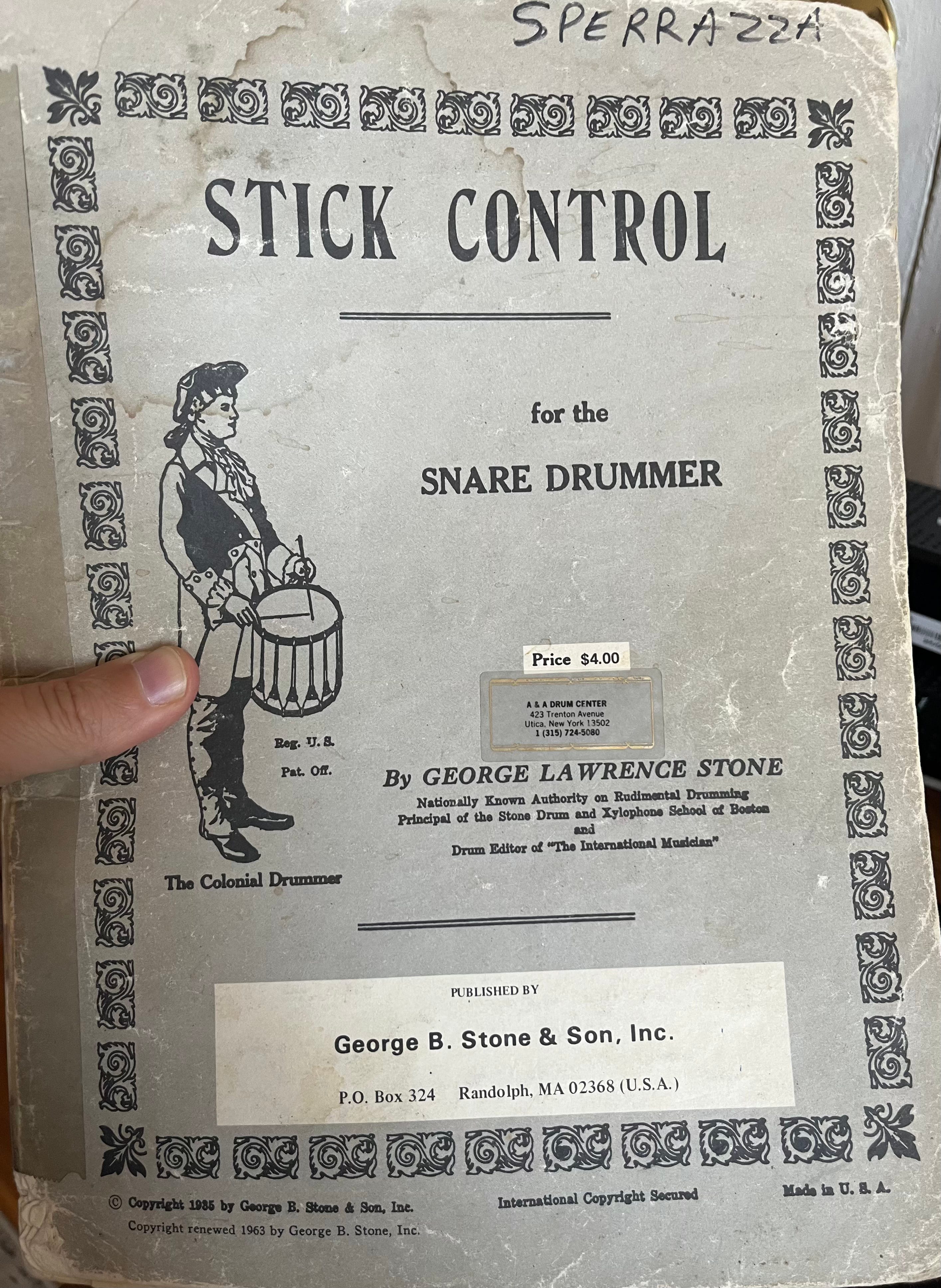
George Lawrence Stone’s Stick Control was self-published in 1935, an essential text ever since.
Essential, yes, but Stick Control is also more than a bit esoteric. Huge swaths of the book— the buzz rolls, the 192 flam exercises, the 3/8 section, and the last four pages— are often unplayed, partly due to fatigue and also because Stone’s terminology and notation are just so darn obscure. You stare at the page and wonder— what is he even talking about? Why are there so many exercises? What is the ultimate point of this book? Why do we all use it?
When I was in high school, I was pushed through every page of Stick Control by my beloved Utica-area teacher, Rick Compton, a true fount of drum wisdom and lore who knew the book’s every nook and cranny.
And here’s the thing: Stick Control works, plain and simple. The more I teach it, the more I practice out of it, the more I see how Stone’s strange terms, unfussy presentation, and omission of any musical context is what makes the book so great— “a feature, not a bug”. Once you get it, each page of Stick Control, those endless lists of Rs and Ls and Fs and rolls and triplets, becomes not only a technical challenge but an invitation to creativity and individuality.
Play down those columns and Stone seems whisper: Try this little thing. Try it again. How about again? Do you hear the music in it? What’s another way to play it? Do you have a pattern like this? Ah, you’ve had enough of that one. Very well, how about this one? Play it on the kit? Why, of course, go right ahead. Add accents? Certainly. Dynamics? As you please. Why not play that one for 15 minutes, and see how much music you can get out of it.
Since I love it so, starting this month, I’m offering on-line private lessons on Stick Control. We can push through the entire book or focus on just a few pages, always with an eye on the big-picture elements— sound and technique— that Stone’s exercises are meant to unlock.
Ultimately, Stone’s book follows a logical progression, and is intentionally bare-bones, incomplete, and open-ended. He did his part with the Rs and Ls— you do yours when you do something with it. I love this book and love teaching it. If you’re interested, here’s a Google Form to fill out, and we’ll take it from there.
Roy Haynes was a big fan of Stick Control, per Mel Lewis. (Although Mel followed that up with the great Roy quote I think about when I listen to so many young drummers -- 'Not everything I play has a name.')
I filled out the Stick Control form. Looking forward to diving back into the book!